Federal rules follow you everywhere, but state registration and tax requirements decide what you file and pay once you cross a line.
Key takeaways
- Kentucky's weight distance tax starts at a combined license weight over 59,999 pounds and costs 2.85 cents a mile. You file every quarter, even with zero miles.
- New York wants a certificate and decal on any truck or tractor over 18,000 pounds gross weight. You also file a return even when no tax is due.
- New Mexico and Oregon start above 26,000 pounds and Connecticut at 26,000 pounds or more. A standard 80,000 pound truck pays 10 cents a mile in Connecticut.
- New Mexico raised its weight distance tax by 35% on July 1, 2026, so use the current rate schedule before you price a load.
- Texas requires its own TxDMV number for intrastate carriers over 26,000 pounds, and you need a USDOT number first.
- California's Clean Truck Check covers subject trucks registered outside the state when they operate there.
- A missed Kentucky filing can cost a $500 revocation fee, while the tax on 1,000 miles there is $28.50.
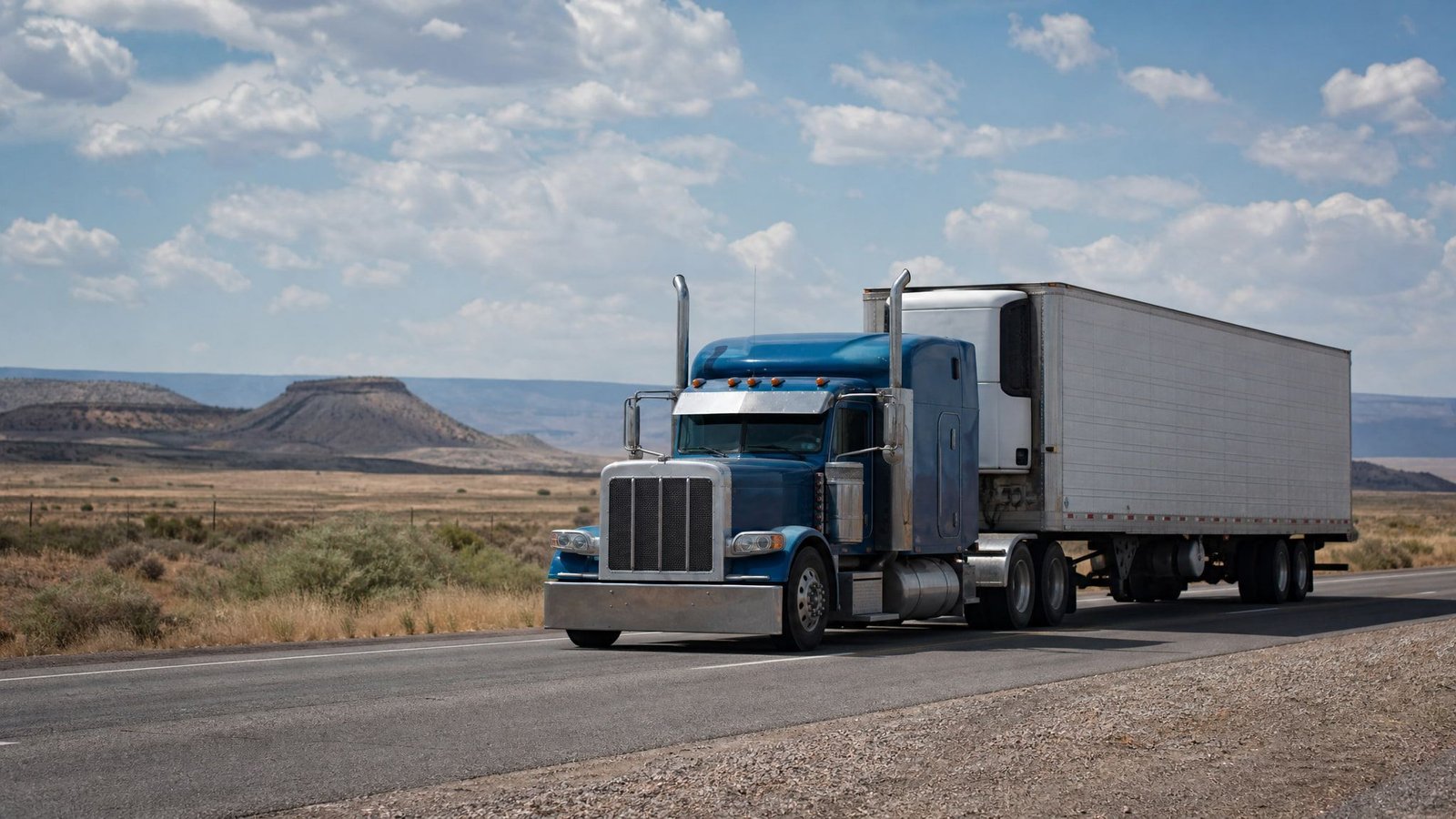
Which trucking rules do states control?
Federal rules cover safety, hours of service and the USDOT number. States control what is left: mileage based taxes, registration requirements for trucks that stay inside the state, and emissions inspections.
The Federal Motor Carrier Safety Administration (FMCSA) ties the USDOT number to trips between states, as its guide on who needs a USDOT number explains. It also says some states require their intrastate carriers to hold a USDOT number. Its list runs to dozens of states, including Kentucky, Connecticut, New York, Oregon, Texas and California. For intrastate registration, FMCSA tells you to check with your state agency.
Your fuel tax is a separate job: the International Fuel Tax Agreement (IFTA) covers fuel tax across states, and the IFTA calculator handles it. The mileage charges below are filed in each state's own system, so they are not part of the IFTA report.
Federal basics such as operating authority and Unified Carrier Registration (UCR) are the same in every state. Read the trucking authority guide and the UCR registration guide first if you have not set those up.
Which states charge by the mile?
Five states in this guide charge operators for each mile driven on their roads: Kentucky, New Mexico, New York, Oregon and Connecticut. The weight that triggers the charge ranges from 18,000 to over 59,999 pounds.
| State | Name | Weight that triggers it | How it is charged | How you file |
|---|---|---|---|---|
| Kentucky | Weight distance tax, called the KYU | Combined license weight over 59,999 lb | 2.85 cents a mile in Kentucky | Quarterly, including zero mile quarters |
| New Mexico | Weight distance tax | Declared gross weight over 26,000 lb | Per mile, rate set by weight, up 35% on July 1, 2026 | Quarterly return, annual permit for each vehicle |
| New York | Highway use tax (HUT) | Gross weight over 18,000 lb | Per mile on New York highways, rate set by weight | Return required even when no tax is due |
| Oregon | Weight mile tax | Registered weight of 26,001 lb or more | Per mile, rate set by weight table | Monthly or quarterly report |
| Connecticut | Highway use fee | Gross weight of 26,000 lb or more | 2.5 to 17.5 cents a mile by weight band, 10 cents at 78,001 to 80,000 lb | Quarterly, due the last day of the next month |
Sources are linked in the next section. This is not a full list of states with mileage or weight based charges, so check the agency for any other state you run through.
Kentucky charges one flat rate, and Connecticut sets the rate by weight band. New Mexico, New York and Oregon also set the rate by weight, so open the state's current rate table before you price a load.
What does each state ask you to do?
Each state requires an account or permit before your first mile. Here is what the state pages say, one state at a time.
Kentucky
Kentucky calls its tax the KYU, and the Kentucky Transportation Cabinet KYU page says it covers carriers on Kentucky roads with a combined license weight greater than 59,999 pounds. The rate under state law is $0.0285 a mile.
Set up a KYID account first, then finish the online KYU application. Returns are quarterly, and filing for July through September opened October 1. Farm plate trucks are exempt, and if you do not run Kentucky often, you can buy a one time temporary KYU permit for each truck.
New York
The New York highway use tax page says any truck, tractor or other self propelled vehicle over 18,000 pounds gross weight needs a certificate. You need a certificate of registration and a decal for each covered vehicle before it runs on New York public highways. The toll paid part of the New York State Thruway is excluded.
The tax depends on the miles you travel on New York public highways and on the weight of the vehicle. You pick gross weight or unloaded weight on your first return of the year. You keep that method for every vehicle until the next year. Occasional operators can get a trip certificate instead of a full registration.
Oregon
Oregon's weight mile tax reporting page shows rate tables that start at a registered weight of 26,001 pounds. Carriers registered with the Commerce and Compliance Division file through Oregon Trucking Online. A monthly report is due by the last day of the next month. A quarterly report is due by the last day of the second month after the quarter ends, so first quarter reports are due May 31.
A late report carries a late charge of 10% of the late tax. Carriers without an account can buy a temporary pass instead.
Oregon is also simplifying the tax. Under House Bill 3991, the Oregon Department of Transportation will cut its rate tables from 85 to 10 and base the tax on registered weight starting July 1, 2027. Until then, the current tables apply.
New Mexico
The New Mexico MVD weight distance page says the tax applies to intrastate and interstate commercial vehicles with a declared gross weight over 26,000 pounds. Each vehicle needs its own annual Weight Distance Tax Electronic Permit, and you file a return every quarter.
The tax went up this year. New Mexico's Taxation and Revenue Department announced on June 29, 2026 that the weight distance tax would increase by 35% starting July 1, 2026. Use the current rate schedule, not an older one, when you price a New Mexico load.
A New Mexico titled truck gets a weight distance plate if it stays in the state, or an IRP plate if it crosses state lines.
Connecticut
Connecticut's highway use fee started January 1, 2023. The Department of Revenue Services page says it covers trucks with a gross weight of 26,000 pounds or more in Federal Highway Administration classes 8 to 13. The fee runs from 2.5 cents a mile for 26,000 to 28,000 pounds up to 17.5 cents a mile above 80,000 pounds.
You register on the myconneCT portal. Returns are quarterly and due on the last day of the month after the quarter ends, so the July through September return is due at the end of October.
What does a state mileage charge cost you?
At the published rates, a Kentucky mile costs 2.85 cents and a Connecticut mile costs between 2.5 and 17.5 cents, depending on weight. The tax is small per mile, but it accumulates on a long stay in the state.
| Rate | Cost of 100 miles | Cost of 1,000 miles |
|---|---|---|
| Kentucky, 2.85 cents | $2.85 | $28.50 |
| Connecticut, 2.5 cents (26,000 to 28,000 lb) | $2.50 | $25.00 |
| Connecticut, 10 cents (78,001 to 80,000 lb) | $10.00 | $100.00 |
| Connecticut, 17.5 cents (over 80,000 lb) | $17.50 | $175.00 |
In a worked example, say a 600 mile load has a 100 mile leg in Connecticut and your truck weighs 80,000 pounds. The leg costs 100 times $0.10, or $10.00, which is about 1.7 cents a mile across the whole load.
Add the state charge to your cost per mile the same way you add fuel. Divide the tax by all the miles on the load, then check the result in the cost per mile calculator.
My take: the dollar amount is rarely the problem, because a missed filing often costs more than the tax does. A quarter of Kentucky tax on 1,000 miles is $28.50, while the revocation fee for skipping a zero mile filing is $500.
Which states make you file when you did not drive there?
Kentucky, Connecticut and New York all require a filing when you had no miles or no tax. This is the trap that catches drivers who ran a state once and forgot the account.
| State | Must you still file? | What a miss can cost |
|---|---|---|
| Kentucky | Yes. File zero miles for any quarter you did not travel. | Penalties, interest and a $500 revocation fee |
| Connecticut | Yes. Registered carriers file every quarter, even with no Connecticut miles. | Late or incomplete return penalty of 10% of the unpaid tax or $50, whichever is greater, plus 1% interest a month |
| New York | Yes. Certificate holders, other than trip certificate holders, file a return even if no tax is due. | Ask the state about penalties before you skip a return |
Check Oregon's and New Mexico's rules for zero mile reports before you assume you can skip one.
Does Texas have its own trucking registration?
Yes, if you run only inside Texas and meet one of its triggers. The Texas Department of Motor Vehicles (TxDMV) requires its own number for intrastate carriers in several cases. For a tractor trailer, the one that matters is a weight rating over 26,000 pounds.
The TxDMV number page lists five triggers:
- A vehicle or combination rated over 26,000 pounds
- Hazardous materials that need placards
- A farm vehicle rated 48,000 pounds or more
- A vehicle built to carry more than 15 people
- Household goods moved for pay
You must have a valid USDOT number first, and you register it as intrastate, not interstate. Your insurance company files your proof of insurance, and the filing must stay active at all times. For most carriers over 26,000 pounds, the minimum liability is $500,000.
If you cross a state line on your trips, you are on the interstate side and FMCSA's number rules apply. If you stay inside Texas, check the TxDMV page before the first load.
Does California's Clean Truck Check apply to trucks from other states?
Yes, for subject vehicles. California's Clean Truck Check applies to some trucks registered outside California when they operate in the state.
The California Air Resources Board (CARB) says Clean Truck Check requirements are in effect, per a March 10, 2026 notice on its program page. The notice says they cover subject vehicles, including vehicles registered outside California when they operate in the state.
Owners pay an annual compliance fee, and some vehicles follow a semi annual periodic compliance schedule.
Confirm with CARB whether your truck is a subject vehicle, and what fee applies, before you take a California load.
Who should worry about state rules, and who can wait?
If you run on your own authority and touch any of these states more than once a year, set up the account before the load. If you pass through a state a few times a year, a temporary option may cost less.
Own authority: you carry all of it, so register, file and pay. Kentucky offers a temporary KYU permit, New York a trip certificate and Oregon a temporary pass. Occasional runs do not need a full account.
Leased on: your lease says who files and who pays. Find that clause before you run the state, and read your settlement for any deduction. The lease on carrier terms guide shows what to look for.
Company driver: your carrier files, so you can skip the accounts. Knowing the rules still helps if you plan to lease on or buy a truck.
The verdict depends on your weight rating. A straight truck under 26,000 pounds falls below the New Mexico, Oregon and Connecticut triggers, but New York still covers it above 18,000 pounds. Check your own gross weight against the table before you assume you are exempt.
What should you do this week?
- List every state you ran in the last 90 days from your trip log.
- Compare your truck's gross weight with the triggers in the table above.
- Open the state page for each match. Register, or buy the temporary permit if you only pass through.
- Put the due dates on your calendar. Connecticut's July through September return is due at the end of October, and Kentucky's filing for the same quarter opened October 1.
- Add each state charge to your cost per mile.
General information as of October 18, 2026, not legal or tax advice. Confirm current rates and deadlines with each state agency before you file.
Frequently asked questions
Do trucking regulations differ by state?
Yes. Federal rules cover safety and the USDOT number for interstate trips. States add mileage taxes, registration for trucks that stay inside the state, and emissions rules.
What is the Kentucky KYU tax?
It is Kentucky's weight distance tax. It covers carriers on Kentucky roads with a combined license weight over 59,999 pounds, at $0.0285 a mile, filed quarterly through the Motor Carrier Portal.
Is a state highway use tax part of IFTA?
No. Each state above runs its own account and return, separate from your IFTA fuel tax report. Use the IFTA calculator for fuel tax.
Do I need a USDOT number to haul only inside one state?
FMCSA ties the federal number to trips between states, but says some states require intrastate carriers to hold one. Its list runs to dozens of states, including Kentucky, Connecticut, New York, Oregon, Texas and California. Check with your state agency.
What weight starts a state mileage charge?
It varies. New York starts at 18,000 pounds gross weight. New Mexico and Oregon start above 26,000 pounds, and Connecticut at 26,000 pounds or more. Kentucky starts above 59,999 pounds combined license weight.
Does Connecticut charge trucks from other states?
The Connecticut page applies the fee to any eligible vehicle operated on a Connecticut highway and does not carve out out of state trucks. Plan to register and pay.
Which states have their own RigDigest guide?
None yet. The map shows coverage as it grows, and a green state means a full guide is live.