Buying a Truck
New or used, what to inspect, how to finance it, and the lease purchase traps.
Every step from company driver to your own truck, in the right order.
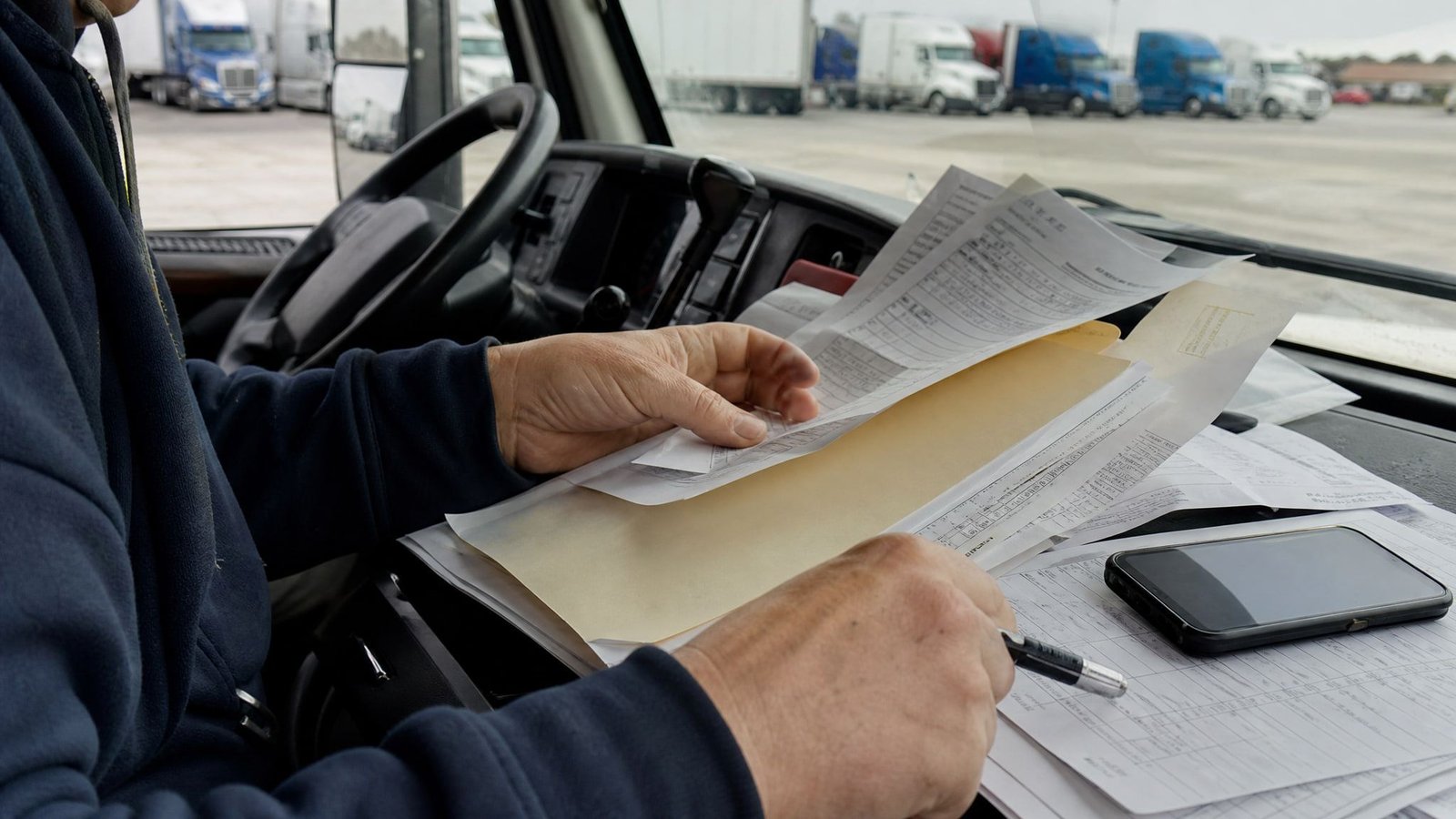
To become an owner operator, you have 3 paths and 9 main legal steps for your own authority. Truckstop puts the startup cash at $10,000 to $20,000 or more, counting the truck down payment, insurance and fees. Know your cost per mile first, then pick the path that fits your numbers.
I drove for 3 carriers as a company driver before I bought my first truck in 2019. I leased my truck to Landstar Ranger for 3 years. Today I run under my own Motor Carrier Authority.
You already know how to handle the road. When I leased on, the math got real fast.
Every fuel stop, every repair bill and every insurance renewal came straight out of my settlement. So this guide starts with your numbers.
Below are the main steps in the order you will meet them. You get the 3 paths, the legal setup, the startup money and your first loads. Each section points you to the deeper guide.
Your cost per mile is what you spend to move your truck 1 mile. It tells you if a load is worth taking.
Add up your fuel, truck payment, insurance, maintenance, tires, permits and ELD fees. Then divide by the miles you run.
The American Transportation Research Institute (ATRI) put the average cost to run a truck at $2.336 per mile in 2025. That is up 3.4% from 2024, and the highest in the report's history.
That average includes $1.028 per mile for driver wages and benefits. As an owner operator, your own number will be different.
Your rate per loaded mile has to beat your cost per mile. What is left over is your pay.
I built the Cost Per Mile calculator from the spreadsheets I use to run my own numbers every week. Put in your truck and your lanes, and you will see where you stand.
You can run under your own authority, lease on with a carrier or sign a lease purchase. Here is how each one works.
Own authority. You get your own USDOT number and MC number from FMCSA. You book your own freight and carry your own insurance. You keep the full rate, less your costs.
This is how I run today. Every number, every contract and every decision is on me.
My trucking authority guide covers this path in full.
Lease on with a carrier. You bring your truck and run under the carrier's authority. The carrier holds the MC number. Your pay is set by the lease you sign with that carrier.
I ran this way for 3 years at Landstar Ranger as a BCO. That is Landstar's name for a leased owner operator.
The Lease On guide shows you what to look for in a carrier's contract.
Lease purchase through a carrier. You get a truck through the carrier's own financing. Then you sign a second agreement to haul for that same carrier.
The carrier sets your pay rate, the truck payment and the insurance payment, FMCSA's Truck Leasing Task Force found. Read every line before you sign.
The task force delivered its report on January 16, 2025. It estimated that fewer than 1 in 100 drivers in these programs end up owning the truck. It asked Congress to ban lease purchase deals.
OOIDA's own members did better. About 28% of its owner operator members had signed a lease purchase, Land Line reported in 2021. About 60% of those said they got the title.
Those are their numbers, not mine.
I would lease on first. ATBS puts insurance at $3,000 to $5,000 a year when you are leased on. Under your own authority, it puts it at $8,000 to $12,500.
Buy a used truck. Lease on while you build a cash reserve. Get your own authority when the numbers support it.
That is the order I did it in: a used truck, 3 years leased on, then my own authority.
Your own authority takes 9 main steps. Here they are in the order you file them. Fees and rules were checked on October 5, 2026.
The MC number guide has the fees and the phase out status. The requirements checklist puts every item on one page.
For the premium itself, see semi truck insurance cost.
That list is not the whole job. OOIDA's checklist also names Form 2290 (the heavy highway use tax) and a drug and alcohol testing program. It also names state permits for New York, New Mexico, Kentucky and Oregon.
Truckstop says to expect at least $10,000 to $20,000 to start a trucking company. That counts the truck down payment, insurance, registration and fees. It published that number in January 2025.
OOIDA says to set aside at least 60 days of operating capital before your first load. Standard broker terms are usually net 30, Truckstop says. That is about 30 days after the invoice.
You will hear scary failure rates for new carriers. How many owner operators go out of business each year shows what the real counts say and where those famous numbers came from.
Here is what the main pieces cost, with the source for each.
| Cost | Amount | Source |
|---|---|---|
| Used truck | $45,000 to $100,000 | ATBS, 2024 |
| Truck down payment | 10% to 15% with good credit, up to 30% with bad credit | Bankrate, 2025 |
| MC authority | $300 | FMCSA |
| BOC 3 | $20 to $40 | ATBS, 2024 |
| UCR, 1 or 2 trucks | $55 for 2027 | FMCSA final rule, 2026 |
| IRP plates | About $1,700 a year on average | ATBS, 2024 |
| Insurance on a new authority | Quotes from $8,000 to $20,000 or more a year | Overdrive, 2026 |
| ELD | About $20 to $50 a month | FreightWaves, 2026 |
Prices and rates checked October 5, 2026. Your own quotes will differ.
For example, a $45,000 used truck takes $4,500 down at 10% and $13,500 down at 30%.
Progressive says its for hire transport truck customers paid an average of $926 a month for insurance in 2025. That works out to about $11,100 a year.
I would not start without the reserve. Without it, you will take any load at any rate to make your truck payment.
Build your own number in the Startup Cost calculator.
I would buy a used truck with full service records and a clean engine inspection. The records matter more to me than the miles.
ATBS puts a used truck at $45,000 to $100,000. It puts a new one at $125,000 to $150,000. Walk away from a truck with no service history.
My first truck was used too: a 2009 Freightliner Columbia with a Detroit engine. I bought it in 2019.
The Buying a Truck guide covers what to inspect, how to finance it and the lease purchase traps.
You can book freight once FMCSA grants your authority. Start on a load board. DAT and Truckstop both charge by the month.
DAT's carrier plans run $59 to $339 a month. Truckstop's run $42 to $159 a month, or $299 for heavy haul. Prices checked October 5, 2026.
I had to know what a load cost me before I could tell if it was worth taking. Check every load against your cost per mile.
The Loads and Rates guide shows you how to read a rate con (rate confirmation) and deal with brokers. It also shows you which freight pays and which freight wastes your miles.
Cost per mile is where you start. After that, you need a system for the rest: factoring, per diem, IFTA, quarterly estimated taxes and your settlement sheet.
The Money and Taxes guide shows you how to track what you make and what you keep. It also shows you how to run a simple profit and loss statement for your truck.
Pick your path first: lease on with a carrier, sign a lease purchase or get your own authority. For your own authority, you form a business and get a USDOT number and MC authority. Then you file your BOC 3, insurance, UCR, IRP and IFTA.
Truckstop says to expect at least $10,000 to $20,000 to start. That counts the truck down payment, insurance, registration and fees. OOIDA says to set aside at least 60 days of operating capital before your first load.
The MC authority fee is $300, and FMCSA does not refund it. The USDOT number is free. You apply for both online in Motus, FMCSA's registration system.
FMCSA says a new application may take 20 to 25 business days. More review can add 8 weeks or longer. FMCSA will not grant your authority until your insurance and BOC 3 are on file.
No. You can lease on and run under a carrier's authority. The carrier holds the MC number, and the lease you sign sets your pay.
I would lease on first. ATBS puts insurance at $3,000 to $5,000 a year leased on, and $8,000 to $12,500 under your own authority. Lease on while you build a cash reserve.
Prices and rates checked October 5, 2026.
New or used, what to inspect, how to finance it, and the lease purchase traps.
Load boards, brokers, rate confirmations and freight that actually pays.
Cost per mile, factoring, fuel, per diem and taxes, so you keep more of every load.