How to Get Started as a Hotshot Trucker in the United States
To get started as a hotshot trucker, you need a truck and trailer that fit your license, a business, USDOT and MC numbers, insurance filed with FMCSA, and enough cash to wait for your first payment. The truck is the easy part. The paperwork and the cash decide who lasts.
I run a semi on my own authority, so I won't pretend I've pulled a gooseneck. What I can show you is the business side every new carrier faces, in the order that costs the least. I checked every fee and rule below against the FMCSA and IRS websites and the Federal Register on November 21, 2026.
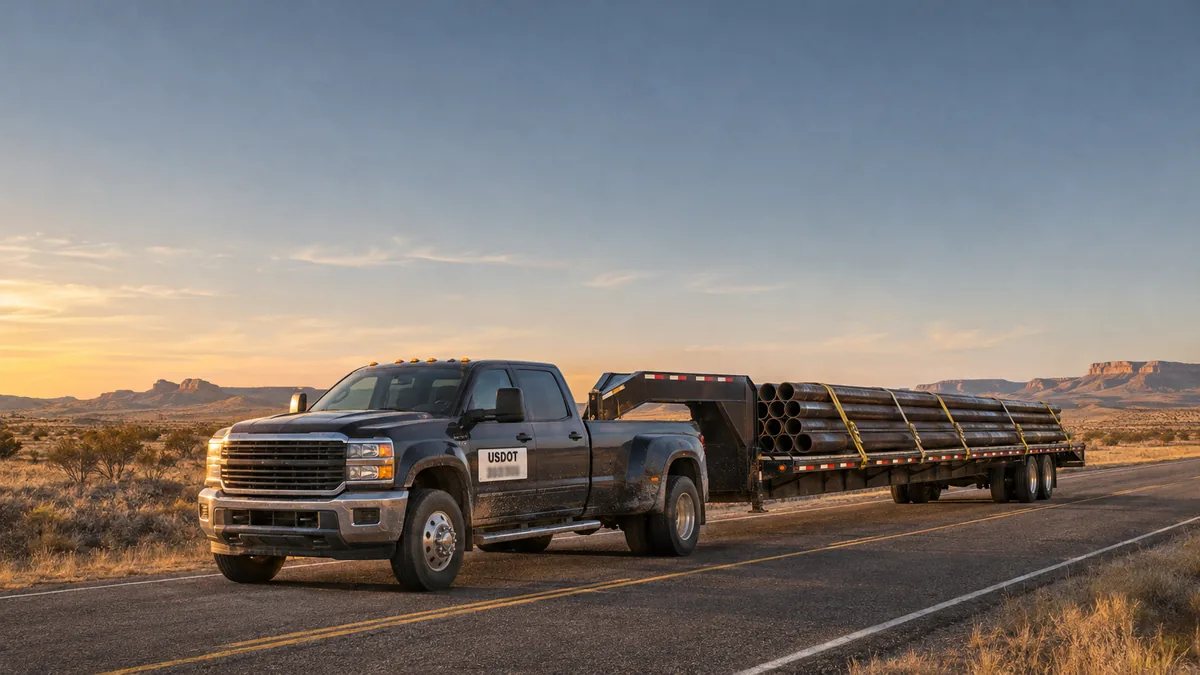
What a hotshot trucker actually does
Hotshot trucking means hauling freight on a flatbed or gooseneck trailer behind a heavy duty pickup. The loads are often smaller than a full truckload, or too oddly shaped for a dry van. You get them from brokers and shippers, and what you earn depends on the lane and the load. Ignore anyone who quotes you a weekly number.
Do you need a CDL to start hotshot trucking?
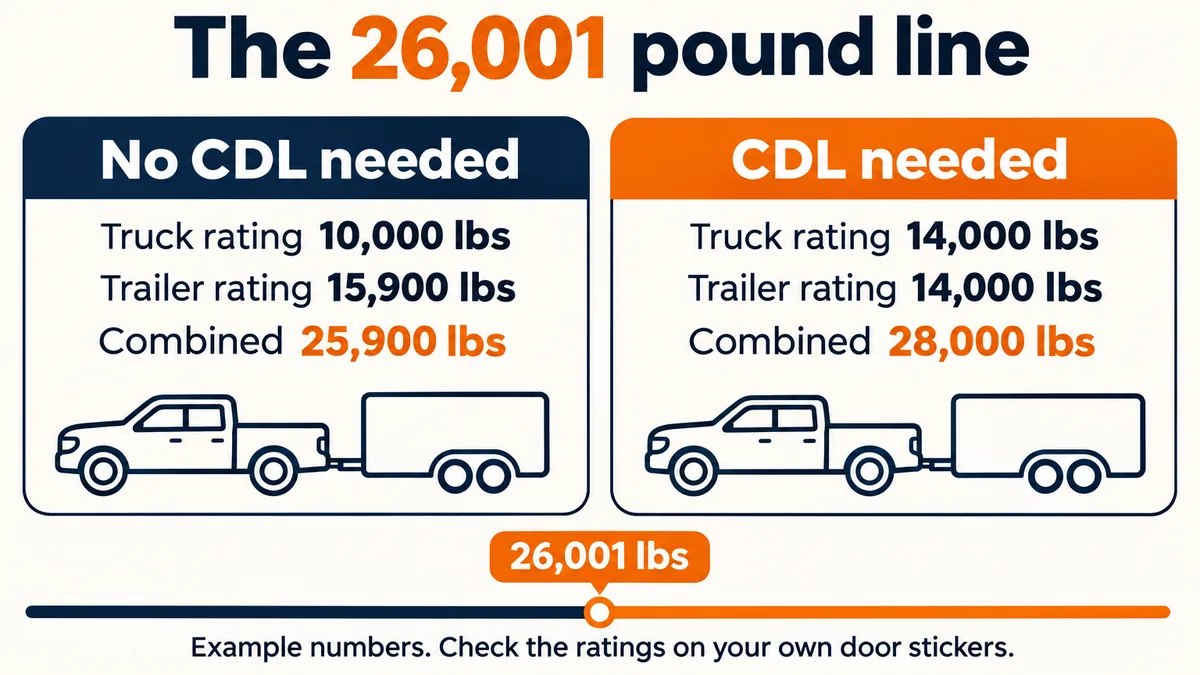
Not always. Federal rules draw the line at the combined weight rating. You need a CDL for a combination vehicle when its combined rating is 26,001 pounds or more and the trailer's own rating is over 10,000 pounds (49 CFR 383.91).
That is a rating, not the weight on your scale ticket. The combined rating is the greater of two numbers: the figure the truck maker lists on the certification label, or the sum of the truck and trailer ratings (49 CFR 383.5). So a truck with a high number on its label can put you over the line even when your own math looks fine. Read the label before you pay for anything.
Here is an example with made up ratings. A truck rated 10,000 pounds and a trailer rated 15,900 pounds add up to 25,900, under the line. A truck rated 14,000 pounds and a trailer rated 14,000 pounds add up to 28,000, over it.
Skipping the CDL doesn't skip the rules. A truck or combination rated 10,001 pounds or more in interstate commerce needs a USDOT number (FMCSA) and falls under the hours of service rules. You also need a DOT medical exam under 49 CFR 391.41. Since June 23, 2025, medical examiners no longer issue a paper certificate to CDL holders, because the result goes to the state and onto the driver's record (FMCSA National Registry). That change covers CDL holders, so without a CDL expect to carry your medical certificate.
Should you get the CDL anyway? If you want heavy equipment loads, yes, because it opens up bigger trucks and trailers. If you want to start cheap and learn the business, stay under the line for now.
Getting started as a hotshot trucker: the paperwork, in order
Do these before you buy anything. A truck note with no authority behind it earns nothing.
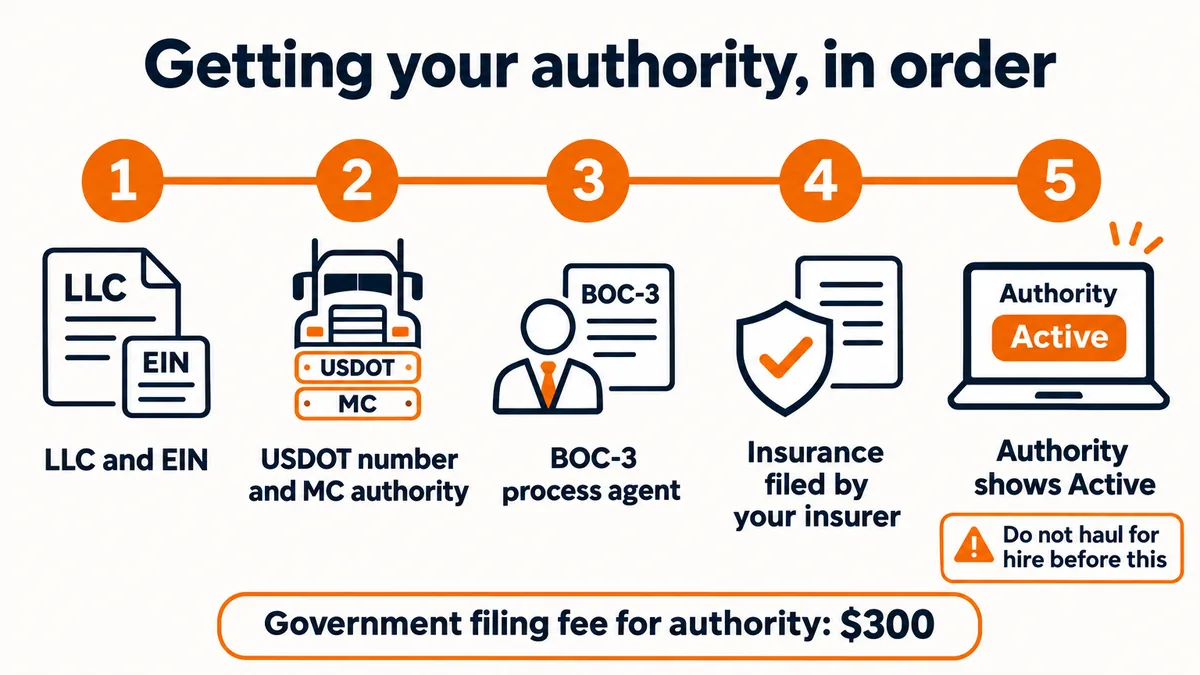
- Form your business and get an EIN. Set up an LLC with your state. The IRS gives EINs away for free and you can apply online, so never pay a website for one (IRS).
- Apply for your USDOT number and MC authority. FMCSA shut down its old registration systems on May 14, 2026 and moved to a new one called Motus. You need a Login.gov account first, then identity and business verification (FMCSA Motus FAQs). Authority costs $300 per authority type and is not refunded, so pick only the type you need (FMCSA). If you never leave your state, your state's rules apply instead, and FMCSA says Motus doesn't track them.
- File your BOC-3. It names a process agent in every state you run in or through. You or the agent can file it, and FMCSA's form instructions give you 90 days from the date your application is published (OP-1 instructions). Agents charge their own fees, so compare a few.
- Have your insurer file proof of coverage. A for hire carrier of non hazardous freight in a vehicle rated 10,001 pounds or more needs at least $750,000 in liability coverage on file (FMCSA). Many brokers ask for more, so call them before you buy a policy.
- Wait for authority to show Active. Your MC number is not authority yet. FMCSA publishes your application, a 10 calendar day protest period starts, and you can't haul for hire until authority is issued (OP-1 instructions). Under the old system FMCSA quoted 20 to 25 business days for new applicants, longer if it reviews your file. Plan on a month or more.
- Register for UCR. It's a yearly fee based on fleet size. For the 2027 registration year, fleets of 0 to 2 vehicles pay $55, up from $46 in 2026 (Federal Register). My UCR registration guide covers it step by step.
Add it up and the government fees come to $355, before your process agent and your insurance down payment. Filing services charge their own fee on top of that. You can do every step yourself if you take them in order and check each one. The filing guide inside the Hotshot Trucking Startup Kit walks through exactly that.
Why I'd inspect the truck twice before buying it
My first truck was a used one I bought in Houston and financed. I paid a mechanic $500 for a pre-purchase inspection, and it didn't catch the problems. The engine failed eight months later and I paid for a short engine rebuild. Three months after that the turbo and radiator failed, and I let the truck go.
That was a big truck, not a pickup, but the lesson fits any used rig. A cheap inspection isn't a safe one. Pay someone who works on that exact engine and ask for a written list. Have the trailer checked too, including the axles, brakes, deck and gooseneck coupler. Walk away from any seller who won't let your mechanic look.
Then plan for repairs before the payment. A truck note is the cost you know about. Repairs are the one you don't see coming.
How much cash you need before the first load
No single number fits everyone, so build yours. Add your fixed monthly costs: truck payment, trailer payment, insurance, phone, load board and your own living costs. Multiply by three. That is the cash I'd want in the bank before a first load, and it's my rule, not a federal one.
Then add the one time costs: the $355 in government fees, your process agent and the insurance down payment, plus a repair fund for tires and breakdowns.
Brokers and shippers often pay weeks after delivery, and you buy fuel the whole time. I wrote about that gap in the owner operator fuel cash flow gap. To run your own figures, use the owner operator startup cost calculator.
Can you start with no money?
Starting with no money rarely works. The government fees are small, but insurance wants a down payment, the truck needs fuel and repairs, and you wait for pay. Starting thin usually means financing everything, which leaves no room for the first breakdown.
If cash is tight, you have two safer paths. Drive for a company and save the reserve first, or lease on with a carrier and run under their authority while you learn.
Before you book a load
Check that a broker's authority is active on FMCSA's Licensing and Insurance site before you haul for them. Read the rate confirmation before you sign it. And while your authority is pending, watch the market on a free load board; I list the ones worth your time in free load boards for owner operators.
Hours of service still apply to a pickup
Once your rig is rated 10,001 pounds or more, you follow the property carrying limits: 11 hours of driving inside a 14 hour window, plus a 30 minute break after 8 hours of driving (FMCSA). Some exceptions exist for short haul work, and I cover them in hours of service exceptions.
Is hotshot a good way to start?
It's a fair way in if you already own a heavy duty truck or can pay cash for a good one, you have three months of costs saved, and you're ready to run a business instead of just driving. It suits someone who likes hands on work and can sit through a slow month.
It's a poor fit if you need the first load to cover the truck note, if you're stretching a loan to buy the rig, or if paperwork makes you quit. Those drivers do better leasing on or driving for a company for a year first. Two things would change my answer: steady freight lined up before you buy, or a cheaper truck in clean shape.
What to do this week
Read the certification label on the truck you're considering. Start your LLC and get your EIN. Call two insurers and ask what they'd charge for $750,000 in liability on your exact setup. Then look at the $300 authority fee and decide whether your cash reserve can carry you through the wait.
Want to run your own numbers first? Use the cost per mile calculator to find your break even rate. Then fill in the free hotshot business plan template. My MC number guide goes deeper on the authority filing.
If you'd like all of this in one place, the Hotshot Trucking Startup Kit (interstate edition) has a startup budget and cost per mile calculator in Excel, a business plan workbook in Word, a used truck and trailer inspection checklist, a guide to filing your own authority, and a first 30 days plan.
Sources
- FMCSA: Do I need a USDOT number?
- FMCSA: Get an MC number (operating authority)
- FMCSA: Registration modernization FAQs (Motus)
- FMCSA: Insurance requirements
- FMCSA: Form OP-1 instructions
- FMCSA: Hours of service
- eCFR: 49 CFR 383.5
- eCFR: 49 CFR 383.91
- eCFR: 49 CFR 391.41
- IRS: Get an Employer Identification Number
- Federal Register: Fees for the Unified Carrier Registration Plan and Agreement (91 FR 56063)
- FMCSA National Registry: Driver fact sheet on National Registry II