Hazmat Truck Driver Pay: Real World Pay Ranges, Premiums, and What Influences Your Earnings
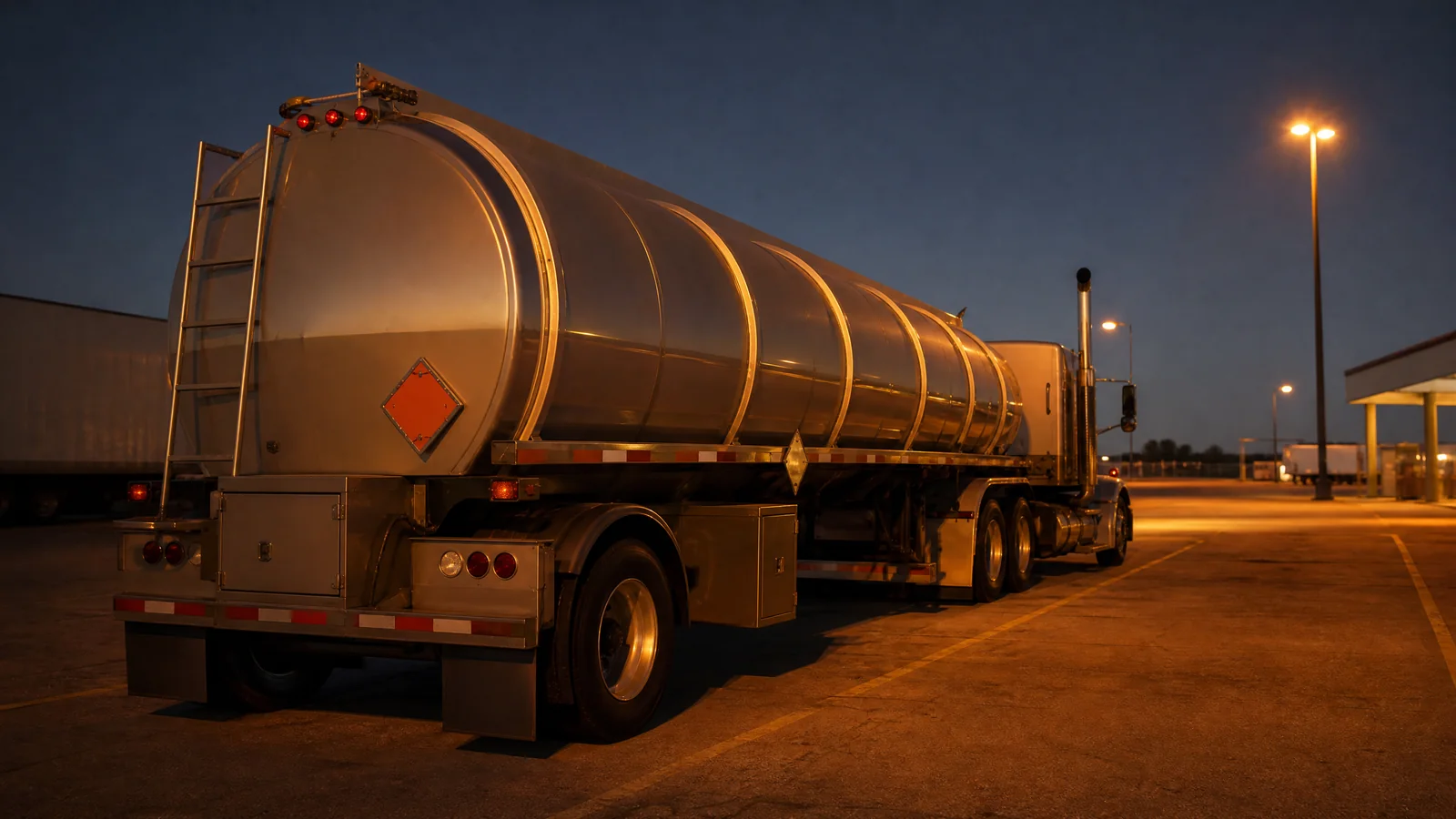
Hazmat truck driver pay does not jump just because you hold the H endorsement. The job that needs it is what pays more. All heavy truck drivers earned a median $58,640 in May 2025, and one carrier now pays $0.10 more per loaded mile on placarded loads. If every one of your 90,000 loaded miles carried a placard, that would add about $9,000 a year.
I hold a hazmat endorsement on my CDL and I have 11+ years over the road. When I was leased on with Landstar Ranger, the endorsement raised the rate I was offered on placarded loads.
How much do hazmat truck drivers make?
Federal data does not split out hazmat drivers. The Bureau of Labor Statistics reports one number for all heavy and tractor trailer drivers: a median of $58,640 a year, or $28.19 an hour, in May 2025.
BLS also says drivers are mostly paid by the mile, plus bonuses, and that the rate can change with the cargo and the driver's experience. That one idea explains most of hazmat pay.
Pay offers vary a lot by carrier, so treat any range you see as a range of offers, not a promise. A driver on a local fuel route and a driver on an over the road chemical lane are both hazmat drivers, and their paychecks look nothing alike.
What does placard pay actually add up to?
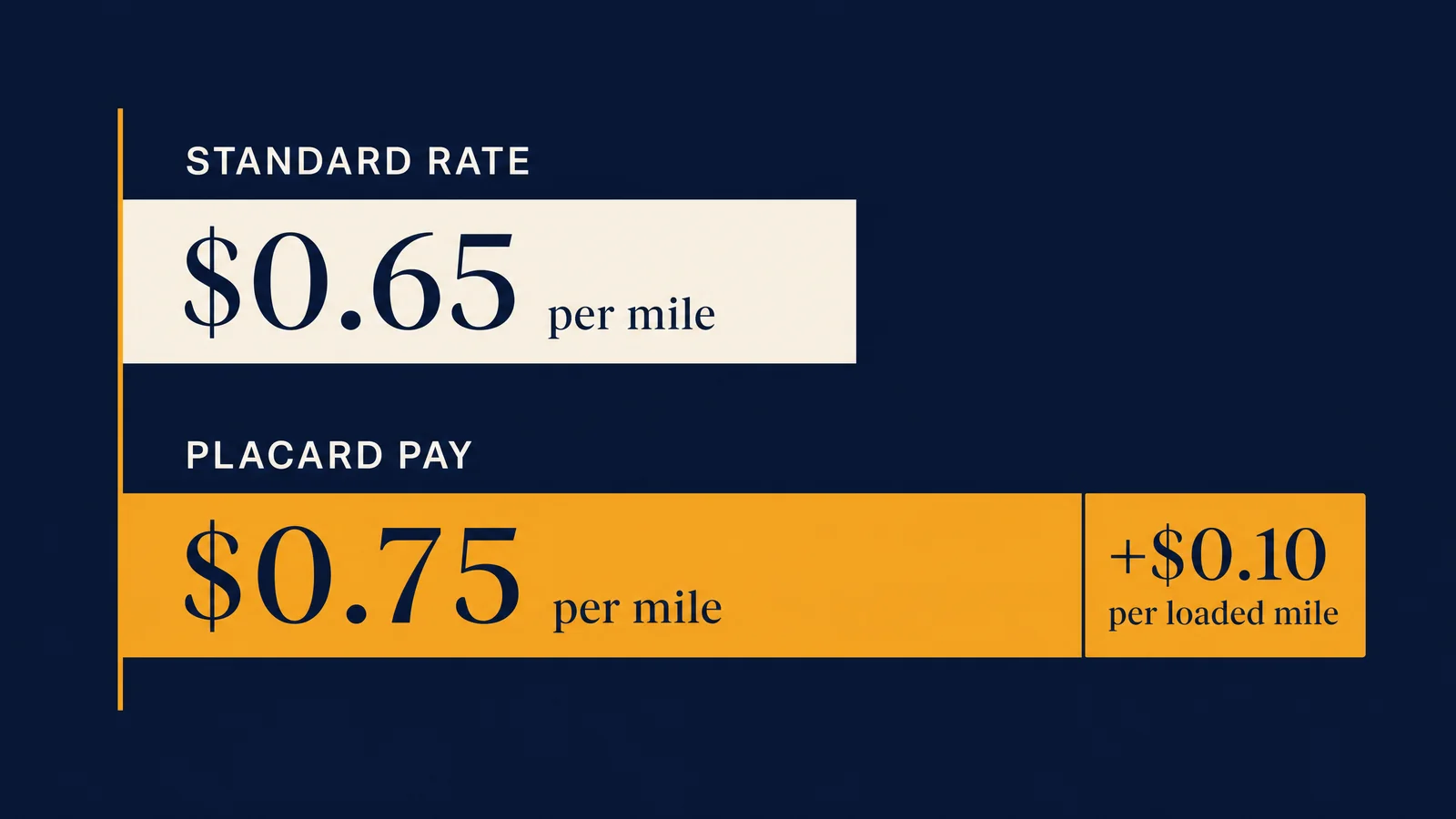
Pinnacle Trucking started "Placard Pay" on September 28, 2026. It adds $0.10 per loaded mile on placarded hazmat loads for its over the road drivers. The standard starting rate is $0.65 per mile, so hazmat loads start at $0.75. That is about a 15% raise on those miles.
Your raise depends on how many of your loaded miles carry a placard.
| Loaded miles per year | Every mile placarded | Half the miles placarded |
|---|---|---|
| 80,000 | $8,000 | $4,000 |
| 90,000 | $9,000 | $4,500 |
| 100,000 | $10,000 | $5,000 |
This is one carrier's program. Use it as a yardstick, not a market rate. Ask every carrier three things: do you pay placard pay, how much, and does it cover every placarded mile or only some loads?
Also compare the total cents per mile, not the label. Some carriers build the hazmat premium into a higher base rate instead of listing it as a line item.
Does hazmat pay more? My verdict
By itself, no. The endorsement opens doors. Tanker, bulk, fuel and chemical jobs are where I would look first for higher base pay and premiums, and a carrier cannot put you on placarded loads without it.
It fits a company driver with a clean record who wants tanker, chemical, fuel or bulk work, or who is talking to a carrier that pays placard pay.
Skip it if you plan to stay in dry van freight and just want a raise. You would pay the fees and sit the test for a credential that many dry van carriers do not pay extra to hold.
Three things would change that verdict: a carrier that pays placard pay, a local tanker job with a higher hourly rate, or a lane where hazmat loads pay more per mile than the freight you haul now.
What influences your hazmat earnings
Cargo and equipment
Placarded freight in a box trailer pays differently than bulk liquid in a tank. Tank work needs the N endorsement. If you haul hazmat in a tank, you need X, which federal rules define as the combination of the tank vehicle and hazardous materials endorsements.
How you are paid
Pay can be per mile, hourly, weekly or a share of the load. BLS notes that some long distance drivers, especially owner operators, earn a share of shipping revenue.
Hourly jobs tend to pay for waiting time. Many per mile jobs do not, so the same $0.75 can earn you less than it looks.
Local or over the road
Local hazmat work, like fuel delivery, gets you home daily and often pays by the hour. Over the road work gives you more miles and more time away. Pick the one that matches the life you want, then compare the real weekly pay.
Experience, record and carrier
The endorsement comes with a federal background check, and carriers look hard at your record. A clean record and solid experience give you room to ask for the placard pay and the better lanes.
Route limits and wait time
Hazmat routes can run longer and loads can sit at the dock, and every unpaid hour lowers your real rate per mile. Ask how the carrier handles detention before you sign.
What hazmat job pays the most?
No single title wins, and government data does not rank hazmat jobs. Look first at tanker and bulk work with a carrier that pays a premium and wants the X endorsement. Whatever you find, compare the full weekly number, not the headline rate.
What does the hazmat endorsement cost, and is it hard to get?
As of October 2026, TSA charges $86.50 for the security threat assessment, or $41 if you hold a valid TWIC and your state accepts it. The assessment lasts 5 years. You give fingerprints. TSA suggests enrolling at least 60 days before you need an answer.
In 8 states, including Texas and Florida, you enroll at the state DMV instead of a TSA center.
The TSA fee works out to about $17 a year, and your state adds its own test and license fees. The H endorsement itself means an extra knowledge test and a background check. The background check takes time, so start early.
What owner operators should add to the math
Hazmat rates look bigger per mile, and so do the costs.
Start with insurance. Federal minimums reach $1 million for oil in interstate commerce and $5 million for in bulk loads of Division 2.1 or 2.2 materials when the containers on one vehicle total 3,500 water gallons or more. Check your quote against those limits before you sign for a premium rate. The semi truck insurance cost guide shows what owner operators pay.
Next, ask whether your loads trigger PHMSA registration. For 2026 to 2027, PHMSA lists a $275 fee for a small business and $2,600 for others, with 2 and 3 year options.
A higher rate only helps if it beats your cost per mile. See what you keep in the owner operator salary after expenses guide.
What to do this week
- Ask three carriers if they pay placard pay, how much, and on which loads.
- Start TSA enrollment if you do not hold the endorsement yet.
- Get an insurance quote that matches the limits for the loads you want.
Then run the real number. Put the hazmat rate you were offered into the cost per mile calculator and see whether it clears your cost.
This is general information. Confirm rules and fees with TSA, FMCSA and PHMSA before you act.
By Emeka Ogbonna, owner operator with 11+ years over the road.